- Spotting
- Posts
- What Comes After Ozempic
What Comes After Ozempic
GLP-1s helped patients lose weight. Now they’re costing women the muscle they need for healthy aging.

Abby Mercado
July 27, 2025
Hi there!
Abby here, Co-Founder & CEO of Rescripted.
You’re receiving this because you previously engaged with Women’s Health in the Wild — thank you! We’ve since evolved that newsletter into Spotting. With more signal and less noise, Spotting is your weekly lens on what’s next in women’s health and why.
At Rescripted, we’re endlessly curious about the women’s health & wellness consumer. What does she care about? How can we better serve her, speak to her (not over her), and innovate with her in mind? Each week, I’ll share insights that help answer those questions.
I’ll be writing most issues myself, though I may occasionally loop in team members or outside voices. I can’t promise it’ll go out every week, but I can promise it’ll be thoughtful. I usually focus on the business side of Rescripted, but writing helps me process where this industry is headed, for her. Thanks for following along as I find my footing 🫶🏻
A Quick Note on Format
Each edition of Spotting will follow a simple framework to help cut through the noise and make sense of what’s happening in women’s health:
This Week’s Signal: A cultural, clinical, or commercial shift that’s rising and worth paying attention to.
What We’re Missing: What’s being overlooked, from nuance and blind spots to the real-world context that’s often left out.
What We’re Seeing: Who’s getting it right, and how that’s showing up across brand moves, media narratives, funding trends, and consumer behavior.
What It Means: Why it matters, and what it could mean for brands, consumers, and the future of women’s health.
So without further ado, let’s dive on into the good stuff 🏊♀️
This Week’s Signal
Dr. Stacy Sims, one of the fiercest and most no-nonsense voices in women’s health, just dropped an interview on something no one seems to be talking about: coming off GLP-1s.

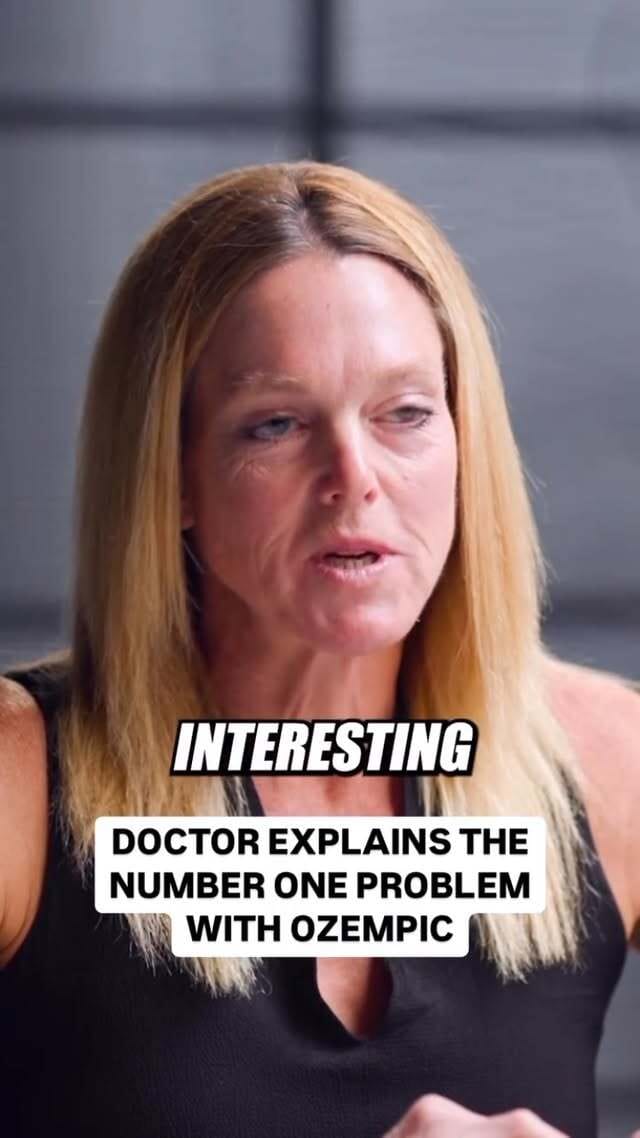
Yes, the internet’s favorite miracle meds (hi, Ozempic and Wegovy) are still making headlines. But as prescriptions soar, another story is quietly gaining momentum: what actually happens after you stop taking them?
Short answer: It’s not great if you’re not prepared. You don’t just lose weight, you lose muscle. And if you’re a woman over 35, that’s a major problem. Muscle isn’t just about strength or aesthetics. It’s your metabolism. Your mobility. Your aging trajectory. And for women approaching perimenopause and beyond, it’s absolutely critical.
What We’re Missing
The GLP-1 hype cycle is all about what these drugs can do. But let’s talk about what they take away.
First, the lean mass loss is real. Depending on the study, up to 40 percent of the weight lost on GLP-1s comes from muscle and bone. That’s not a detail, it’s a health risk. Losing muscle means lowering your metabolism, increasing your risk of injury, and making it harder to maintain weight loss over time.
Second, very few users have a solid exit plan. Most people go on these drugs without guidance on how to preserve muscle while they’re losing weight, and even fewer have support when they stop. Without resistance training, higher protein intake, and targeted support, the result is often rebound weight gain and worse metabolic health long term.
As Dr. Sims puts it,
“These meds are powerful. But without a strategy to preserve muscle, you’re setting yourself up for setbacks.”
She’s 100% right. (Obviously. She wrote the book on this stuff.)
What We’re Seeing
A few early movers are starting to wake up to this:
Ciba Health just launched the first GLP-1 Step-Down Program in the U.S., designed specifically to help people taper off these medications safely while rebuilding their metabolic health. Think personalized support, nutritional counseling, and lifestyle coaching that extends beyond the pill bottle.
On the pharma side, Eli Lilly’s BELIEVE trial shows promising results from pairing semaglutide with bimagrumab, a drug designed to preserve muscle. The combo led to greater fat loss while protecting lean mass, a potential game-changer for long-term outcomes. Regeneron and Scholar Rock are also exploring similar combinations, aiming to reduce the trade-offs inherent in today’s GLP-1 therapies.
What It Means
GLP-1s aren’t a fad. They’re a new chapter in how we treat obesity, metabolic dysfunction, and chronic disease. But the brands that will win consumer trust aren’t just the ones with the best molecule. They’re the ones helping people live healthier, stronger lives, on and off the drug.
Sell the script, sure. But teach the lifestyle too. Because weight loss might be what people want, but strength is what they actually need.
With more signal and less noise, Spotting is your weekly lens on what’s next in women’s health and why. See you right here next time, in your inbox.
With hugs, science & freedom,
Abby
P.S. Whether this hits or misses for you, I’d love to hear your thoughts — just hit reply. Thanks for being here 🤗

Reaching 20M women monthly and partnering with trusted brands like Pfizer, Kotex, BetterHelp, and Noom, Rescripted is the leading media platform for all women and her health, from first period to last period.